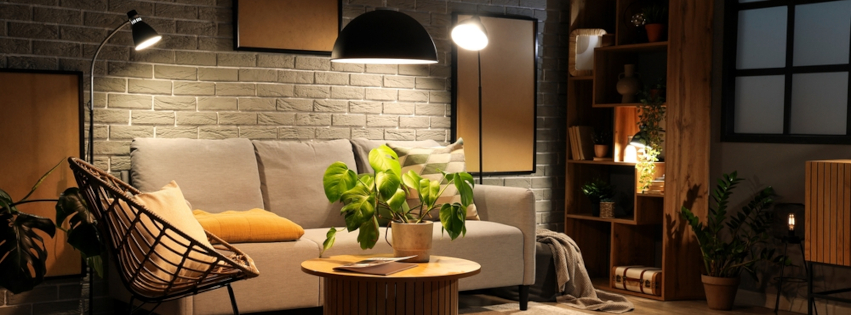
Let there be light: A guide to mastering your home's ambiance
Lighting is more than just a way to see in the dark; it's a powerful tool for shaping the mood, function, and aesthetics of your home. A well-lit space feels welcoming, sophisticated, and comfortable, while poor lighting can make a room feel cramped, shadowy, or uninviting.
Whether you're decorating a new home or updating a single room, mastering your lighting design can make a world of difference. Here's everything you need to know to brighten your space.
The three essential types of lighting
A truly great lighting scheme uses a combination of light sources to create a layered effect. By understanding the three basic types of lighting, you can tailor the brightness and atmosphere for any occasion.
1. Ambient lighting
This is the base layer of light that provides overall illumination for a room. It's the primary light source you use to get around safely and comfortably.
- Common fixtures: Recessed lights, chandeliers, track lighting, and flush-mount ceiling fixtures.
- Best for: General visibility and creating a comfortable, evenly lit foundation.
2. Task lighting
As the name suggests, this type of lighting is designed to help you perform specific tasks, preventing eye strain and improving focus.
- Common fixtures: Desk lamps, under-cabinet lighting in the kitchen, and reading lamps next to a couch.
- Best for: Work areas, reading nooks, kitchen counters, and vanities.
3. Accent lighting
Use this layer to add drama and highlight specific features, such as artwork, architectural details, or decor. Accent lighting draws the eye and adds dimension to a room.
- Common fixtures: Picture lights, wall sconces, spotlights, and uplights that wash a wall in light.
- Best for: Showcasing paintings, sculptures, or special textures like a brick wall.
The importance of layering light
Think of your lighting like an orchestra. Ambient lighting is the main melody, while task and accent lighting are the harmonies and solos that give the music depth. A single, bright overhead light can create a flat, harsh look, but layering different sources allows you to control the mood and functionality.
A popular guideline suggests having 5 to 7 different light sources in each room. For example, in a living room, you might combine:
- A central chandelier for ambient light.
- A floor lamp for task lighting next to a reading chair.
- A pair of wall sconces to flank a fireplace.
- Table lamps on side tables.
- A spotlight to highlight a piece of art.
Choosing the right color temperature
Color temperature, measured in Kelvins (K), refers to how "warm" or "cool" a light appears. The right choice can dramatically affect the feeling of a room.
- Warm white (2700K–3000K): Emits a soft, yellowish glow that creates a cozy and intimate atmosphere. This is ideal for living rooms, bedrooms, and dining areas.
- Neutral white (3500K–4100K): A balanced and practical light, offering a cleaner, more focused feel. It works well in kitchens, bathrooms, and home offices where clarity is important.
- Cool white/daylight (5000K–6500K): Emits a bright, bluish-white light that promotes energy and focus. This is best suited for task-oriented spaces like workshops, garages, or reading areas where precision is key.
Embrace smart and energy-efficient lighting
Modern technology has made it easier than ever to customize and control your lighting. Smart lighting systems allow you to adjust brightness, color temperature, and even schedule your lights with a simple app or voice command.
- Dimmer switches: A low-tech but highly effective way to control the intensity of your lights. They're essential for creating different moods in a single space.
- Motion sensors and timers: Perfect for saving energy in outdoor areas, hallways, and utility rooms.
- LEDs: Not only do LED bulbs use up to 75% less energy than traditional incandescent bulbs, but they also have an incredibly long lifespan and produce very little heat, making them a safe and sustainable choice.
By giving your lighting a thoughtful upgrade, you can create a home that is not only brighter but also more functional, comfortable, and beautiful.